


In the modern financial landscape, transparency is no longer just a buzzword; it is a regulatory mandate and a foundational pillar of global trust. As businesses engage in increasingly complex cross-border transactions, the need for a standardized, foolproof method of identification has become paramount.
This is where the Legal Entity Identifier (LEI) comes into play. Endorsed by the G20 and overseen by the Financial Stability Board (FSB), the LEI is rapidly becoming the single most important identifier in the global financial ecosystem. Whether you are a small business owner in the UK, a compliance officer at a major investment bank, or a manager of international funds, understanding the LEI code is essential for navigating today’s markets.
What is a Legal Entity Identifier (LEI)?
At its simplest, a Legal Entity Identifier (LEI) is a unique, 20-character alphanumeric code based on the ISO 17442 standard. It serves as a universal ID for legal entities, such as companies, trusts, and partnerships, that participate in financial transactions.
The purpose of the LEI is to provide a clear and unique identification of every party involved in a financial transaction. Unlike a company name, which can change or be shared by multiple entities across different jurisdictions, an LEI is immutable. It links to a high-quality database of reference data, allowing anyone to verify who is who and who owns whom on a global scale.
The Structure of an LEI Code
The LEI code itself is structured to ensure global uniqueness:
- Characters 1-4: The prefix used to identify the Local Operating Unit (LOU) that issued the LEI.
- Characters 5-18: The entity-specific part of the code, generated according to specific transparent policies.
- Characters 19-20: Two check digits as defined in the ISO standard to prevent input errors.
The History and Evolution of the LEI System
To understand the concept of the LEI, we must look back at the 2008 global financial crisis. During this period, regulators and financial institutions struggled to assess the risk and exposure of various market participants because there was no unified way to identify entities across different markets and countries.
In response, the G20 launched the Global Legal Entity Identifier System (GLEIS) initiative in 2011. The goal was to create a system that would provide transparency and stability to the world markets.
The Role of GLEIF and the FSB
The Financial Stability Board (FSB) appointed a new overseeing body, the Global Legal Entity Identifier Foundation (GLEIF), to implement and manage the system. GLEIF is a non-profit organisation that ensures the integrity of the LEI database and monitors the data quality provided by Local Operating Units (LOUs).
The Regulatory Oversight Committee (ROC), a group of over 70 public authorities from around the globe, provides the final layer of governance, ensuring the system serves the public good and meets the requirements of policymakers worldwide
How the Global LEI System (GLEIS) Works
The GLEIS operates through a three-tier structure designed to ensure transparency, accuracy, and ease of use:
- The ROC: Provides regulatory oversight and defines the standards.
- GLEIF: Manages the central database and accredits the issuers.
- Local Operating Units (LOUs): These are the institutions authorized to issue LEIs to legal entities. They possess the local knowledge required to verify the legal documents and details of the company or fund applying for the code.
The LEI Database: A Source of Truth
One of the most significant benefits of the system is the Global LEI Index. This is a publicly available search tool that allows users to access reference data for over 2 million entities free of charge.
The data is divided into two levels:
- Level 1 Data: “Who is who.” This includes the legal name, address, and jurisdiction of the entity.
- Level 2 Data: “Who owns whom.” This provides information on the parent-subsidiary structure, helping regulators and firms understand corporate ownership and systemic risk.
Who Needs an LEI? Mandatory Requirements and Regulations
The adoption of LEIs has been driven largely by regulation. In many jurisdictions, if you do not have an LEI, you cannot trade. This is often referred to in the industry as the “No LEI, No Trade” rule.
Key Regulations Mandating LEIs
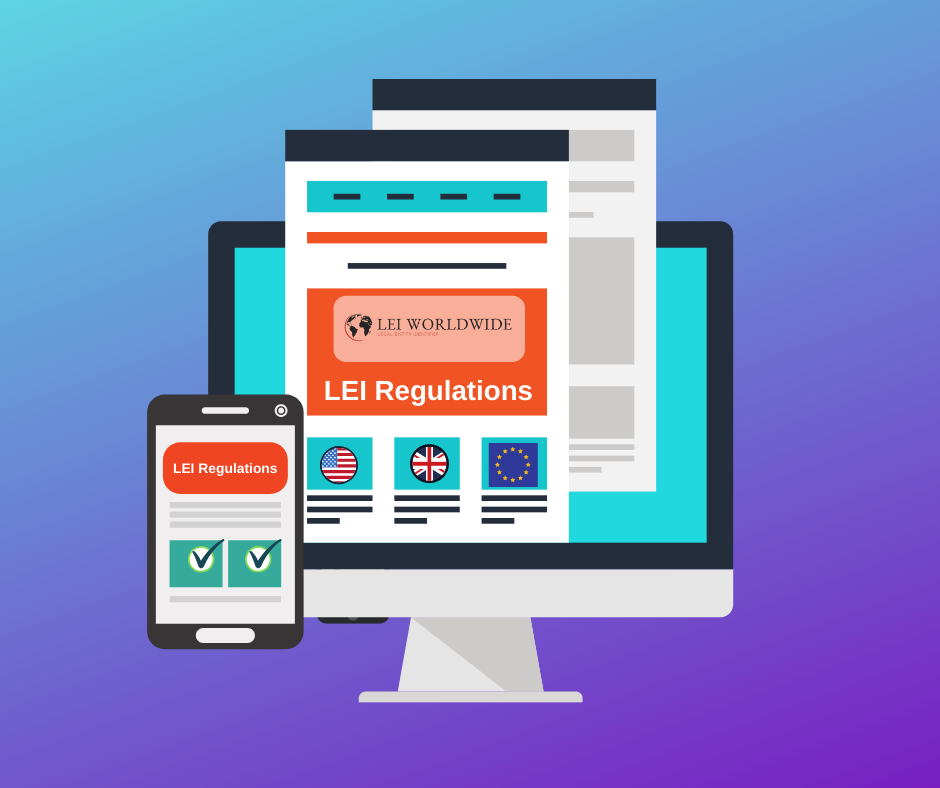
- MiFID II / MiFIR (EU/UK): These regulations require all entities involved in trading financial instruments to have an LEI for transaction reporting.
- EMIR (EU): Requires LEIs for reporting derivatives transactions to trade repositories.
- Dodd-Frank Act (US): Mandates the use of LEIs for various swap reporting and security-based transactions.
- Bank of England: The Bank of England has been a strong champion of the LEI, incorporating it into payment systems and reporting frameworks to improve data granularity.
Types of Entities That Require an LEI
It is a common question whether small businesses or specific funds need an LEI. Generally, any legal entity participating in the financial markets needs one, including:
- Limited Companies and Corporations.
- Investment Funds and Pension Schemes.
- Trusts and Charities.
- Government Entities and Parastatals.
- Branch offices (in certain jurisdictions).
The Benefits of Obtaining an LEI for Your Business
While compliance is a primary motivator, the benefits of having an LEI extend far beyond satisfying regulators.
1. Increased Transparency and Trust
In an era of digital transactions, proving your identity is vital. An LEI acts as an international business passport. When you provide your LEI code to customers or parties in a transaction, they can instantly verify your existence and status on a government-backed database.
2. Streamlined Onboarding (KYC and AML)
Financial institutions spend billions annually on Know Your Customer (KYC) and Anti-Money Laundering (AML) checks. The LEI streamlines this process. By providing a standard format for data, it reduces the time spent on manual verification of documents and details.
3. Risk Management
For firms managing large portfolios, the LEI allows for better risk assessment. By linking data sets through a unique identifier, institutions can gain a clearer picture of their exposure to specific corporate groups or sectors.
4. Access to Finance
As noted by the Bank of England, building a complete picture of a business through linked data can help smaller entities access finance. When lenders have trust in the information provided, the decision-making process becomes faster and more reliable.
How to Obtain and Renew a Legal Entity Identifier
The application process for an LEI has been designed to be straightforward and efficient, often taking only a few minutes to complete.
Step-by-Step Registration
- Choose a Provider: You can register through an LOU or a Registration Agent like LEI Worldwide.
- Provide Entity Details: You will need to submit your company name, address, registration number, and information regarding your parent structure (if applicable).
- Verification: The LOU will verify this information against official sources, such as local company registries.
- Payment and Allocation: After a small charge, the LEI code is issued and uploaded to the GLEIF database.
The Importance of Annual Renewal
An LEI is not a “once-and-done” number. To ensure the data quality of the world system, LEIs must be renewed annually. During renewal, the LOU checks that the reference data (such as address or ownership changes) is still accurate. If an LEI is not renewed, its status changes to “LAPSED,” which may result in trading delays or regulatory fines.
Advanced Concepts: vLEI and Digital Transformation

The future of the LEI is digital and automated. GLEIF has recently introduced the vLEI (Verifiable LEI). This is a digitally verifiable credential that allows entities to sign statements, contracts, and financial statements with a high level of security.
By leveraging AI and blockchain-adjacent technologies, the vLEI allows individuals with the right to represent an organisation to prove their authority digitally, anywhere in the world, in any of the languages supported by the system.
Frequently Asked Questions (FAQs)
What is the purpose of a Legal Entity Identifier?
The purpose is to create a standard, global database of legal entities to increase transparency in financial markets and reduce risk.
Can I search for an LEI by company name?
Yes, using an LEI Search Tool, you can find an entity by searching for its name or its 20-digit code.
How much does an LEI cost?
The cost varies depending on the service provider and the length of the subscription (e.g., 1-year vs. 5-year plans). Bulk discounts are often available for firms managing multiple funds.
Is an LEI the same as a VAT number?
No. While both are identification codes, a VAT number is for tax reporting within a specific jurisdiction, whereas an LEI is for financial transaction reporting on a global scale.
What happens if I don’t have an LEI?
If you fall under regulations like MiFIR or EMIR, your bank or broker may be legally prohibited from executing your trades.
Conclusion: The LEI as a Pillar of Modern Finance
The Legal Entity Identifier is more than just a 20-digit number; it is a vital part of the global financial stability initiative. By providing a unique and standard way to identify market participants, the LEI system fosters trust, reduces costs, and protects the integrity of markets worldwide.
As adoption continues to grow across different sectors, from banking to supply chain management, the LEI will remain the gold standard for entity identification.
Are you ready to secure your company’s global identity?
Whether you are looking to register a new LEI, renew an existing one, or transfer your management to a more efficient service, staying compliant is easier than ever.