


Navigating the complexities of global financial compliance requires a clear understanding of corporate ownership structures. Since the Legal Entity Identifier was first introduced, the primary objective has been to increase transparency around legal entities and their complex organisational structures. Central to this mission is LEI Level 2 Data.
This professional blog post will explore the vital role of this data level, examining how it maps out the intricate webs of parent and child entities across global jurisdictions. Whether you are a business relationship manager, a junior controller, or a compliance officer, understanding the nuances of the LEI record is essential for effective risk management and successful regulatory reporting.
Decoding the Data: Level 1 vs LEI Level 2 Data
Within the Global LEI System, the information attached to a legal entity is categorised into two distinct sections. To fully grasp the power of the entity identification framework, users must understand the difference between these two data sets.
Level 1 Data: The Corporate Business Card
Level 1 data provides the fundamental details of an organisation. Often referred to as the ‘business card’ information, this answers the question of ‘who is who’ in the market. A standard Level 1 LEI record includes:
- The official legal name of the entity.
- The registered headquarters and physical address.
- The date of incorporation and initial LEI issuance.
- The jurisdiction of formation.
- The status of the LEI renewal process.
Level 2 Data: The Relationship Record
Level 2 Data, or Level II data as it is commonly referred to, is a dedicated reporting field in each LEI record where legal entities must report their parent or child entity relationships. This data provides the answer to ‘who owns whom’ and ‘who belongs to whom’.
Transparency around entity ownership is paramount to a healthy and functioning corporate identity system. The Level 2 LEI Data provides valid, up-to-date information regarding ownership structures, making it significantly easier for market participants to evaluate risk and trust in their transactions. The Global Legal Entity Identifier Foundation separated Level 1 and Level 2 data to ensure clarity, allowing users to view the hierarchy in a highly structured format.
The Origins: Why Organisational Structure Visibility is Paramount
Since the financial crisis and the collapse of Lehmann Bros in 2008, the awareness among regulators regarding the systemic risk posed by poor visibility into organisations and their wider ecosystem structures became front and centre.
In the aftermath of the Lehmann debacle, global regulators and market participants across Europe, the Americas, and Asia decided it was absolutely pertinent to form a new identification system. This system needed to be capable of observing a growth in systemic risk and complementing existing identifiers. This initiative led to the creation of the Regulatory Oversight Committee.
The resulting Global LEI System allows for the tracking of not just financial transactions, but also the assignment of those transactions to specific counterparties, including exactly whom those counterparties belong to. The LEI system is the key that unlocks total visibility over the wider marketplace.
Understanding Parent and Child Entity Relationships
When registering or renewing a Legal Entity Identifier, applicants are faced with the crucial step of defining their corporate hierarchy.
Defining a Parent Entity
In order to standardise and clarify Level 2 data, the Global Legal Entity Identifier Foundation has established strict parameters defining what constitutes a parent. An entity is officially considered a parent if it meets the following criteria:
- It owns greater than 50% of the child entity.
- It consolidates the financial accounts of the child entity into its own annual report.
- It is not restricted from reporting the relationship due to binding legal obstacles.
If an organisation meets these definitions, the relationship must be captured in the database. For example, if we look at the LEI code of Apple Inc., we can see the family tree of Apple related entities that exist within their ecosystem. Because the LEI index is a free and publicly accessible database, we can see clearly the direct and ultimate parents of an organisation. This benefits the broader economy by allowing companies to know exactly who they are dealing with and verifying if parties are indeed who they say they are.
Direct Parent vs Ultimate Parent
According to the Regulatory Oversight Committee, there is a distinct difference between direct and ultimate parents.
- Direct Parent: The direct accounting consolidating parent of a legal entity is the lowest-level legal entity that prepares consolidated financial statements including the child entity.
- Ultimate Parent: The ultimate parent is the highest-level legal entity that prepares consolidated financial accounts within the entire organisational group.
Both the ultimate parent and direct parent can be distinguished within the LEI record. In the case where the direct and ultimate parent are the exact same entity, this detail will also be captured seamlessly during the online LEI application form process.
How to Report LEI Level 2 Data Effectively
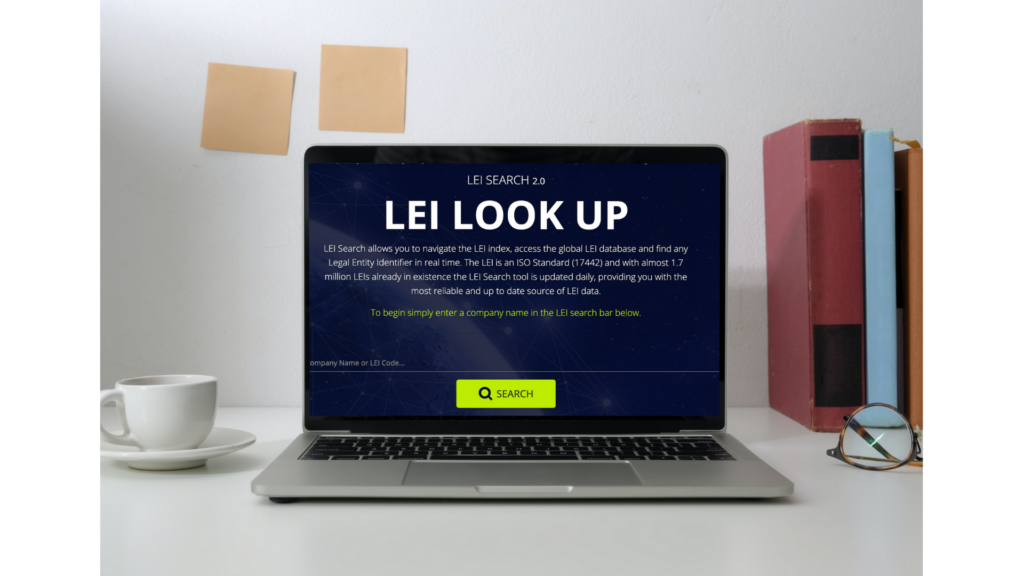
Submitting parent information correctly is a critical phase of the registration and document lifecycle. To report a parent entity in an LEI application, you will be required to provide a set of consolidated accounts that actively verify the relationship.
The validation process is rigorous. Local Operating Units and LEI Validation Agents check the submitted documents against public registries such as OpenCorporates or government databases to confirm the existence and exact ownership percentages. The standardisation of this process ensures high data quality across the global data pool.
Navigating Reporting Exceptions
Not every business has a parent company. If your legal entity does not have a parent, a relationship record will not have to be reported. However, you cannot simply skip the section. You will be requested to provide a specific reason as to why you are not reporting a parent, selecting from a list of official reporting exceptions.
Acceptable Reasons for Not Reporting a Parent
If your organisation operates independently, you must select one of the following definitions:
- Natural Persons: The parent entity is a natural person or human individual, not another company or legal organisation. (Note: Natural persons acting in a personal capacity are currently excluded from receiving an LEI, though individuals acting in a business capacity may be eligible).
- No Known Person: There is no parent according to the official definition of a legal entity.
- Non-Consolidating: The entity is controlled or owned by other legal entities, however, they do not produce consolidated financial statements.
Legal Obstacles in Reporting
Sometimes a parent entity exists, but the applicant is legally restricted from disclosing the relationship. In such events, the restriction can be mentioned in the LEI application dropdown menu using specific exception codes:
- Binding Legal Commitments
- Consent Not Obtained
- Detriment Not Excluded
- Disclosure Detrimental
- Legal Obstacles
Providing these precise reasons maintains the integrity of the LEI-CDF format and ensures compliance with international statutes without forcing companies to breach local jurisdiction laws.
The Role of the Global LEI System and GLEIF
The Global Legal Entity Identifier Foundation plays the central role in managing the network. They ensure the continuous availability of the GLEIF golden copy, which is the daily updated repository of all LEIs globally.
To cater to a global audience, the GLEIF website and data dictionary are accessible in multiple languages. Users can navigate resources in English, de (German), español (es), français (fr), pt (Portuguese), bahasa indonesia, italiano, 日本語 (ja), ko (Korean), türkçe, polski (pl), and русский (ru), among others. This multilingual approach ensures that regulators, authorities, and market participants worldwide can access and interpret the data accurately.
The data itself is published in several technical formats to suit different IT infrastructure needs. Organisations can download the full data pool via XML schema, RDF, or access concatenated files and delta files to keep their internal databases synchronised. Modern API solutions also allow for real-time integration into corporate onboarding systems.
Key Stakeholders in the LEI Process
The maintenance and utilisation of LEI Level 2 Data involve various professionals across an organisation.
- The Board of Directors and CEO: Ultimately responsible for corporate governance, transparency, and ensuring the business meets global regulation standards.
- Compliance Teams and Process Managers: Tasked with the day-to-day implementation of KYC (Know Your Customer) procedures, heavily relying on LEI search tools to verify new clients.
- Junior Controllers and Accounting Teams: Responsible for preparing the consolidated financial accounts required to prove parent and child entity linkages.
- Office Managers and Administrative Assistants: Often charged with the actual task of submitting the LEI renewal form and uploading the necessary graphics, images, or PDF documents to the registration portal.
- Business Relationship Managers: Use the LEI index to understand the corporate hierarchy of potential partners before entering into binding contracts.
Benefits of Accurate LEI Level 2 Data
The integration of Level 2 Data brings substantial benefits to the financial ecosystem. With the availability of granular financial transaction data made accessible with the LEI, deep analysis can be conducted on a financial institution’s total risk exposure. Market participants can monitor activity levels across different jurisdictions, observing both child and parent entities.
For example, when obtaining an LEI for a fund, the entire fund structure is now reported, not just the umbrella or sub-funds themselves. It is not one single legal entity that paints the picture, it is the sum of all the parts.
Furthermore, high data quality reduces the administrative burden during client onboarding. By simply scanning a digital QR-code linked to a vLEI (verifiable LEI) or pulling a record via an API, institutions can instantly verify corporate identity, vastly speeding up the KYC process and reducing the cost of compliance.
Exploring the Future: vLEI, AI, and ESG
The Global LEI System is continuously evolving. The introduction of the vLEI is revolutionising digital trust, allowing entities to securely cryptographically verify their identity online.
We are also seeing the broader technology community engage with this reference data. Software developers frequently participate in a hackathon to build new applications using the GLEIF API. Artificial intelligence is increasingly being deployed to analyse the massive data pool, drawing connections between disparate entities and identifying hidden systemic risks.
Additionally, the focus on ESG (Environmental, Social, and Governance) reporting is driving further adoption. Regulators are using LEI records to ensure that corporate groups are accurately reporting their carbon footprints and governance structures across all subsidiaries.
Information regarding these advancements is widely available. Market participants can stay informed about LEI news, consultation responses, and global events by following the official channels. You can subscribe to updates, watch educational videos on YouTube, listen to dedicated compliance podcasts on Spotify, follow discussions on LinkedIn, or join groups managed by social network owners on platforms like WeChat.
Conclusion
Understanding LEI Level 2 Data is no longer just an administrative task, it is a fundamental requirement for operating securely within the modern financial framework. By clearly mapping the intricate relationships between parent and child entities, the LEI system provides unparalleled transparency and fosters trust across global markets. Whether you are aiming to streamline your accounting procedures, enhance your KYC protocols, or ensure compliance with international regulations, leveraging the full depth of the LEI record is a critical step forward.