

Last updated: August 2026
In this article
How many LEIs have lapsed Why LEIs lapse Where renewals fail most What renewing an LEI involves Renewing an LEI that has already lapsed How to stop renewing every year Frequently asked questionsAn LEI is valid for twelve months. After that it needs renewing, or it lapses. Every provider will tell you that much. What they don't tell you is how often the renewal simply doesn't happen, and the answer, from GLEIF's own statistics, is: more than a third of the time.
How many LEIs have lapsed
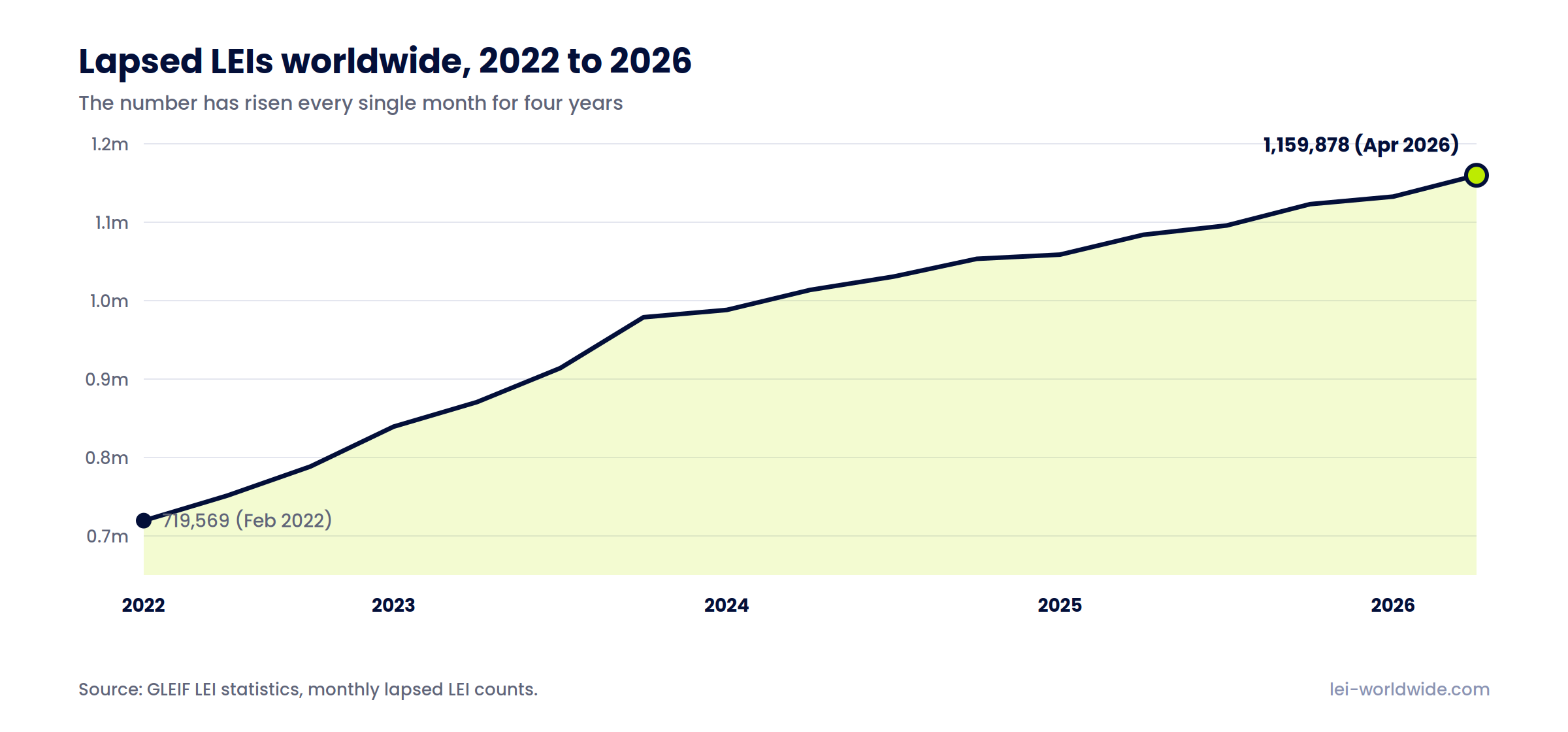
As of April 2026, GLEIF's statistics show 1,159,878 LEIs in lapsed status. Those belong to entities that still exist and still operate; entities that have ceased are recorded separately, as retired. Set against 3.05 million active entities, that's roughly 38% of live LEIs sitting unrenewed. The count has risen every month for four years, from 720,000 in early 2022, while the number of renewals each year has stayed flat at roughly 140,000 to 170,000.
Almost none of those entities decided to let their LEI lapse. There is no reason to. The renewal fee is small, and there is no downside to holding an active LEI. A lapsed one, by contrast, appears in any search of your entity as a visible problem, suggests weak internal compliance controls to anyone who looks, and tends to resurface as an urgent issue at the least convenient moment, the day before a trade needs reporting.
Lapsed is not retired. When an entity genuinely ceases, its LEI is marked Retired. Lapsed means the entity is still operating and the LEI was simply never renewed. By GLEIF's April 2026 figures, lapsed LEIs outnumber retired ones by roughly five to one.
Why LEIs lapse
In our experience the causes are mundane, and that is the point. Nobody forgets an LEI because they decided it didn't matter. They forget it because of how it was set up.
Someone changed roles
The person who registered the LEI three years ago has moved on. Renewal reminders go to an inbox nobody reads, or the email bounces and the issuer has no other contact. Week after week this is the most common thing we see.
The account had one user
If one person holds the login and that person leaves, the LEI is effectively lost with them. Multi-user accounts exist precisely so that a departure doesn't orphan the entity.
Renewals live in a spreadsheet
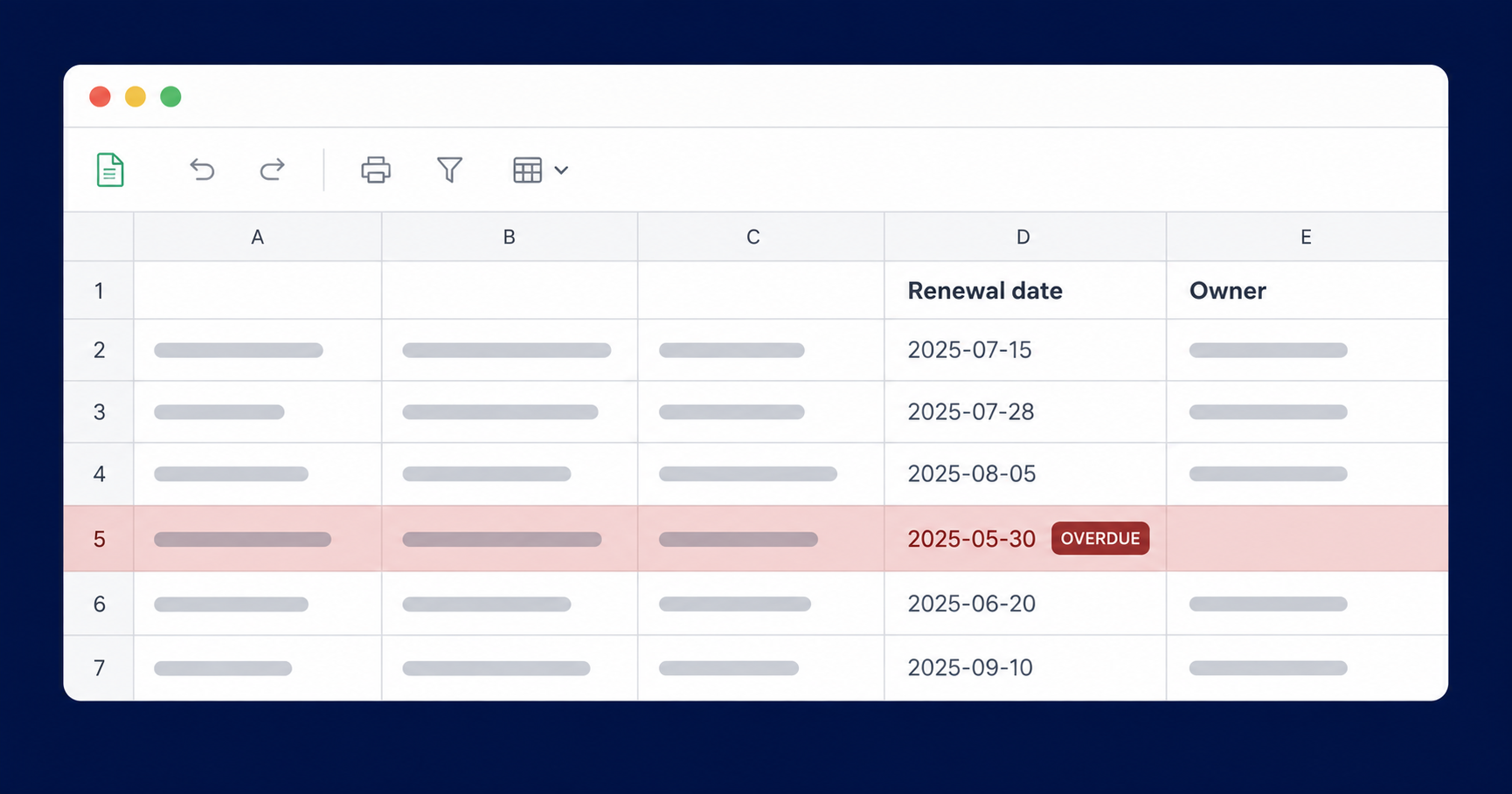
Fine for two LEIs. For forty, across entities and jurisdictions, a spreadsheet means the renewal happens only while the person who built it is still paying attention.
Nobody owns it
The LEI gets filed as a minor admin item, beneath everyone's attention, until the day it isn't minor at all.
Where renewals fail most
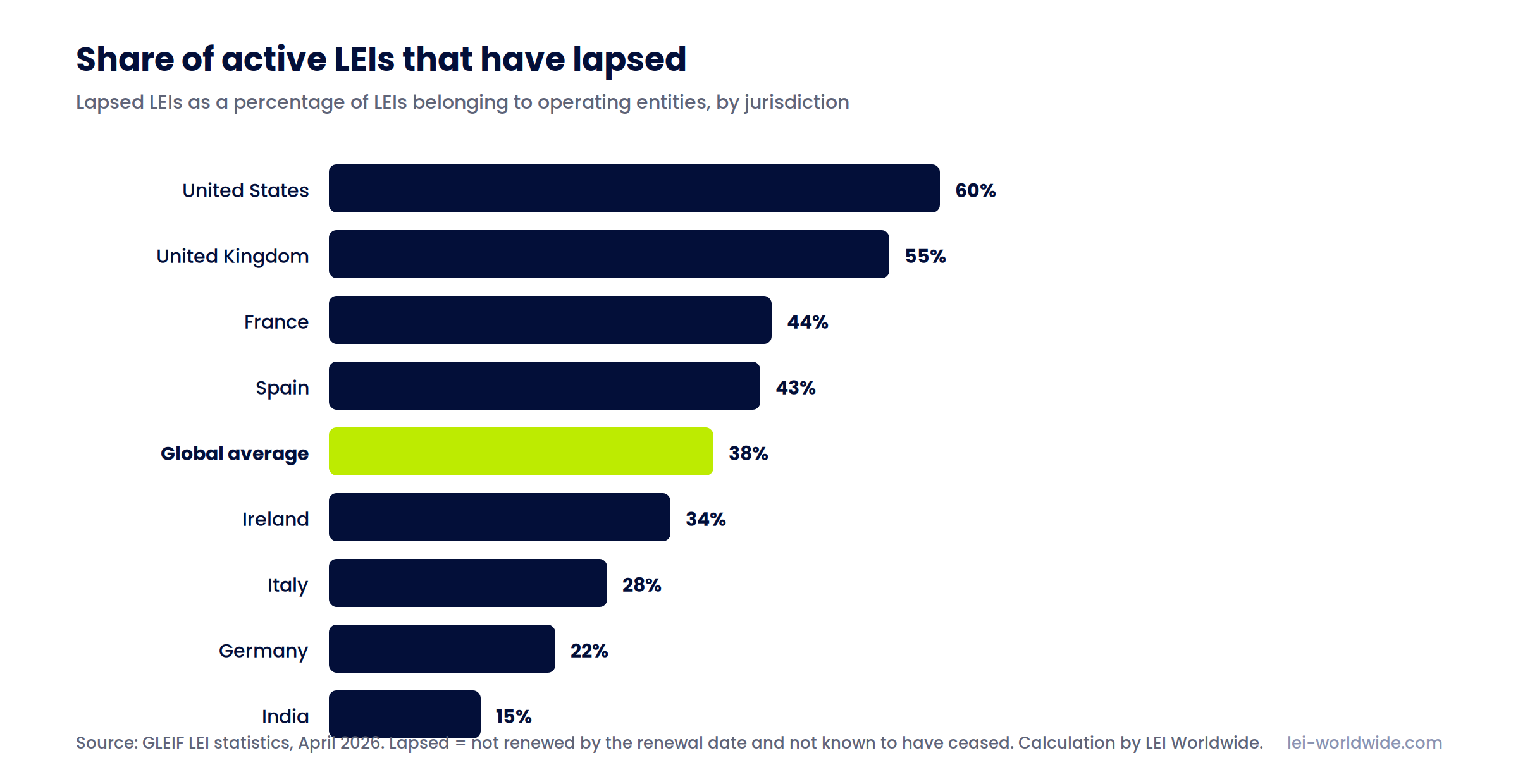
Lapse rates are not evenly spread. Calculated from GLEIF's April 2026 statistics, lapsed LEIs as a share of LEIs belonging to operating entities:
The US and UK renew worst
Six in ten American LEIs and more than half of British ones belong to operating entities that never renewed. These are also the markets with the most LEI providers, which suggests providers compete on issuing LEIs, not on keeping them alive.
India renews best, by a distance
A 15% lapse rate against a global 38%. The Reserve Bank of India ties LEIs to live banking obligations, so an Indian LEI lapsing has an immediate, felt consequence. Where the regulator makes lapse painful, entities renew.
The problem concentrates at the biggest issuers
Bloomberg's LOU manages 263,638 lapsed LEIs and the London Stock Exchange's 155,586, together more than a third of the global total. The largest issuance books carry the largest numbers of unrenewed identifiers.
China is almost entirely lapsed
97% of China's 100,945 LEIs are lapsed, 98,349 of them, almost certainly a single large issuance wave with no sustained renewal behind it. Excluding China, the rest of the world's rate is roughly 36%.
What renewing an LEI involves
The mechanics are simple. Renewal is a revalidation: the entity's data is checked against the company register again, confirming the legal name, address, status and any parent relationships are still correct, and the record on the Global LEI Index is updated with a new renewal date twelve months out.
Because most of that data is already on file from the previous year, a renewal is usually faster than a new registration. The human checks are the same, but the answer is almost always a confirmed match, so the process is quick and straightforward. The exceptions are where something changed: a new registered address, a name change, a restructuring. Those take longer because new data has to be validated rather than confirmed.
With LEI Worldwide, most renewals complete the same day. The renewal fee is the same as a new registration, because the validation work is the same. See current LEI pricing.
Renewing an LEI that has already lapsed
A lapsed LEI is not lost. It can be renewed at any point, and renewal reactivates it: the code stays the same and the record shows as Issued again once revalidation completes.
If the LEI was issued by a provider you no longer deal with, or one that no longer exists, you can transfer and renew in one step. Transfers between accredited providers are free under GLEIF policy. A large share of the lapsed LEIs we reactivate arrive this way: transferred from a previous issuer, often one the holder never chose, and renewed with us in the same motion. The clearest example is the population of LEIs orphaned when GMEI Utility shut down in 2023, many of which lapsed unnoticed after being reassigned.
How to stop renewing every year
Two fixes, and they work together.
Multi-year registration
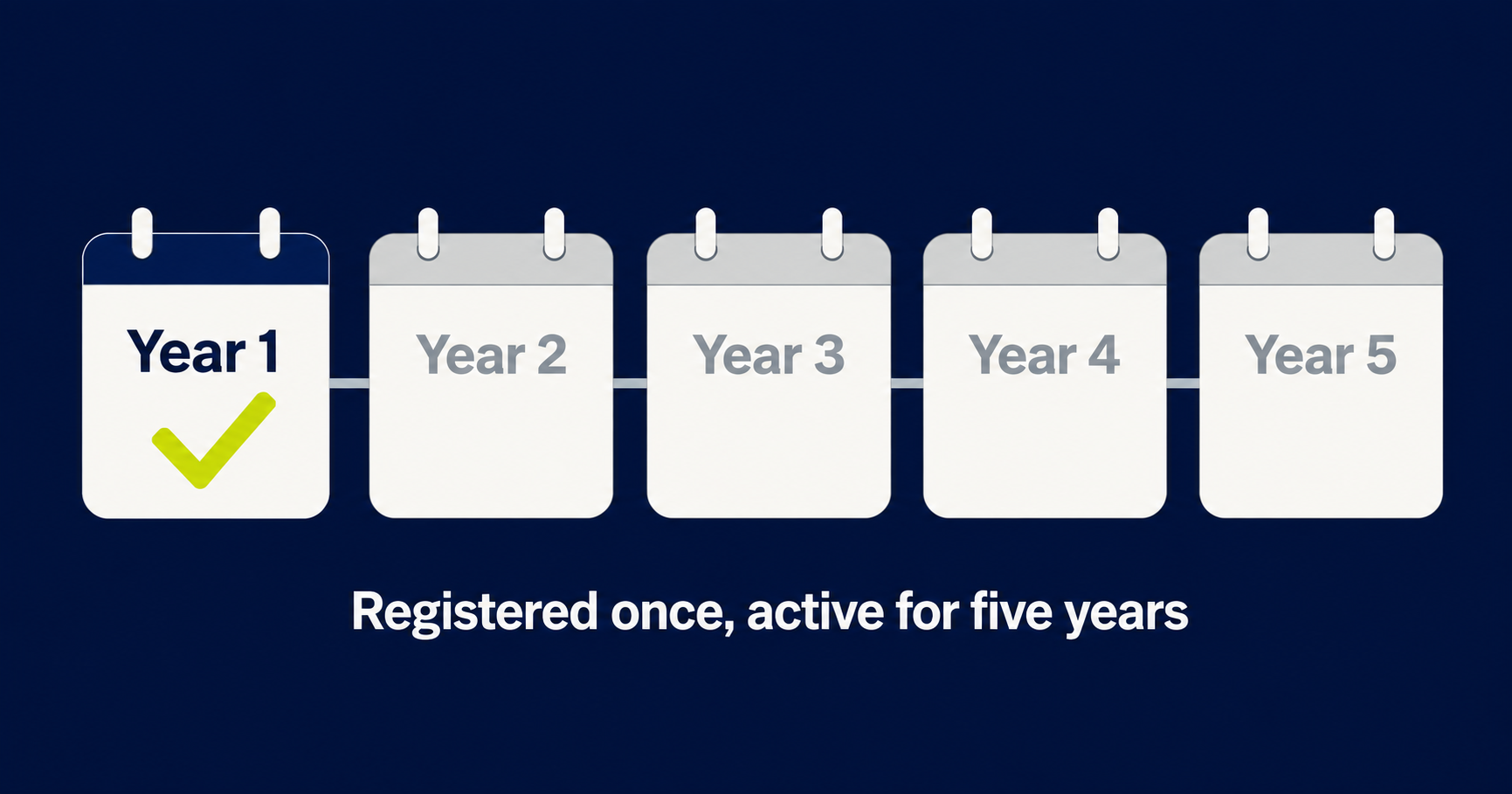
We introduced multi-year LEI registration so that an entity can register or renew for up to five years in one step. The renewal fee per year falls, and there is no annual deadline to miss. For any entity whose LEI exists to satisfy a standing regulatory requirement, which is most of them, there is no reason to renew twelve months at a time.
Automated renewals, with more than one person on the account
For portfolios, the answer is a system rather than a spreadsheet: renewal dates tracked by the platform, reminders that go to a team rather than a person, and multi-user access so that one departure doesn't orphan the estate. This is what RAMP does, and it is why our renewal rate runs at 87% against a global rate of around 70%. Our clients don't care more than anyone else. Their renewals simply don't depend on anyone remembering.
Renew your LEI, or stop renewing it annually
Same-day renewal for most entities. Or register for up to five years and remove the deadline altogether.
Renew my LEI Register for up to 5 yearsFrequently asked questions
How often does an LEI need to be renewed?
Every twelve months. The renewal date is shown on the LEI record on the Global LEI Index. Multi-year registration covers up to five years in one step, with no annual renewal during that term.
What happens if I don't renew my LEI?
The LEI lapses. It still exists but shows as Lapsed on the public register and cannot be used for regulatory reporting until renewed. Renewing at any point reactivates it with the same code.
How much does LEI renewal cost?
The renewal fee is the same as a new registration, because the entity is fully revalidated each year. Multi-year registration lowers the renewal fee per year.
How long does LEI renewal take?
Usually faster than a new registration, because the entity data is already on file. With LEI Worldwide, most renewals complete the same day; changes such as a new address or name take longer because new data must be validated.
Can I renew an LEI issued by a different provider?
Yes. You can transfer an LEI to LEI Worldwide and renew it in one step. Transfers are free under GLEIF policy and the LEI code does not change.
How many LEIs are currently lapsed?
As of April 2026, GLEIF statistics show 1,159,878 lapsed LEIs worldwide, roughly 38% of LEIs belonging to operating entities. The figure has risen every month since 2022.