

In the modern global financial landscape, transparency is not just a preference; it is a regulatory mandate. The Legal Entity Identifier (LEI) has emerged as the gold standard for identifying distinct legal entities participating in financial transactions. Whether you are a small business, a large company, or a complex trust, understanding LEI costs, the registration process, and the long-term maintenance requirements is essential for uninterrupted market access.
This guide provides an in-depth look at LEI pricing, the factors influencing fees, and why choosing the right partner for your LEI code is a critical investment in your organisation’s regulatory compliance and governance.
What is an LEI and Why Is It Required?
An LEI number is a unique 20-characters alphanumeric code based on the standard developed by the International Organization for Standardization. It serves as a global identity card for organisations, allowing regulators and financial institutions to know exactly who is who in the global market.
The system was established following the 2008 financial crisis to provide better risk management and transparency. Today, the Global Legal Entity Identifier Foundation (GLEIF) oversees the issuance and data quality of these codes worldwide.
The “No LEI, No Trade” Rule
In jurisdictions like the UK, the EU, and the US, regulations such as MiFID II, EMIR, and the Dodd-Frank Act have made the LEI a strict requirement. Under these frameworks, if a legal entity does not have an active LEI number, its trades will be blocked by its bank or broker. This “no LEI, no trade” ruling makes the LEI an essential tool for any entity involved in the securities or derivatives markets.
Breaking Down LEI Costs: What Are You Paying For?
When evaluating LEI costs, it is important to look beyond the initial price tag. The total cost of an LEI involves more than just a digital number; it covers a rigorous vetting and validation process designed to ensure the integrity of the global database.
1. Registration Fee
The registration fee is the initial payment made when an entity first applies for an LEI. This covers the primary validation of the company information, including checking official business registries, verifying the registered address, and confirming the authority of the person making the application.
2. The GLEIF Surcharge
A portion of every LEI fee goes directly to GLEIF. This surcharge supports the maintenance of the central LEI index, ensuring that the data remains open, accessible, and free for anyone to search.
3. Renewal Costs
An LEI is not a permanent “set and forget” identifier. To ensure the information in the LEI database remains accurate, entities must undergo an annual renewal. The renewal cost covers the re-verification of the entity’s data.
4. Management and Support Services
Premium providers include additional services in their pricing, such as:
- 24/7 Customer Support: Access to an expert team via chat or email.
- Automated Alerts: Notifications when renewals are due to prevent a lapsed status.
- Data Updates: The ability to change address or company name information without extra charges.
- Fast-Track Issuance: Advanced systems that speed up the registration process.
LEI Pricing Structure: 2026 Updates
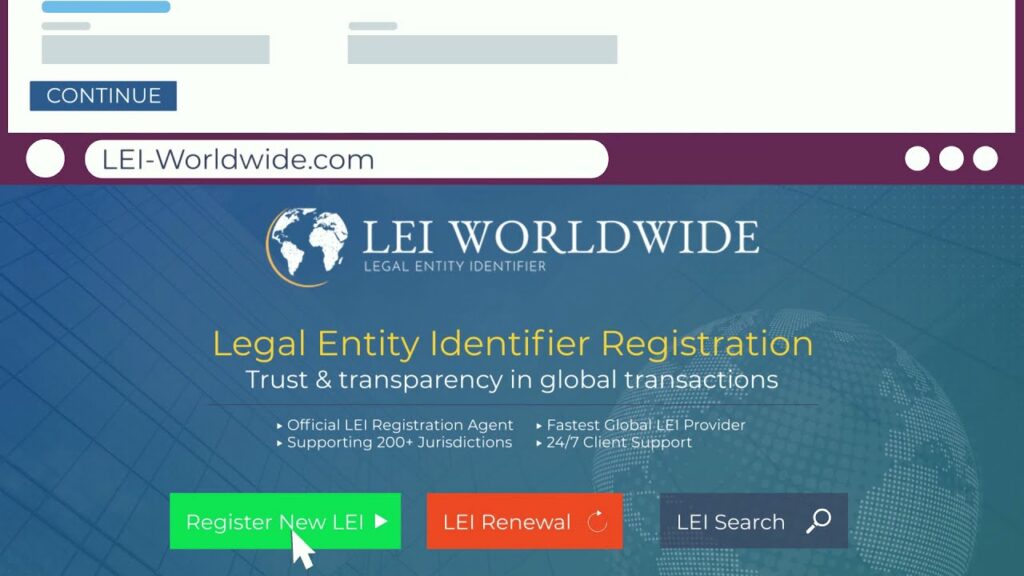
LEI pricing can vary based on the jurisdiction and the service level of the provider. At LEI Worldwide, we offer a transparent fee structure designed to provide scale and value for organisations of all sizes.
Below is a breakdown of our current LEI costs for registration and renewals.
LEI Registration and Renewal Prices
| Subscription Plan | Service Type | Total Cost (Excl. VAT) |
| 1 Year Plan | Registration & 1 Year Renewal | € 89 |
| 3 Year Plan | Registration & 2 Renewals | € 260 |
| 5 Year Plan | Registration & 4 Renewals | € 425 |
Note: Prices are subject to VAT where applicable. Payment options include Visa, Mastercard, and invoice for corporate accounts.
Why Multi-Year Plans Offer Better Value
Choosing a multi-year plan is often the most cost-effective option. Not only does it reduce the per-year price, but it also mitigates the risk of your LEI lapsing. When you choose a 3-year or 5-year renewal package, the provider takes on the administration of the annual updates, ensuring your compliance remains seamless.
Factors Influencing LEI Fees
While the GLEIF fee is standard for all Local Operating Units (LOUs), the final price to the entity can be influenced by several factors:
- Jurisdictional Complexity: In some countries or jurisdictions (e.g., British Virgin Islands or Cayman Islands), obtaining official entity documents may incur additional charges from local registries.
- Entity Type: Complexity in the legal structure of certain trusts or funds may require more intensive manual vetting by expert agents.
- Volume Discounts: Many providers offer bulk pricing for organisations managing a large portfolio of LEIs.
- Transfer Fees: While transferring an LEI from one provider to another is often free, the renewal associated with that transfer will be billed at the new provider’s rates.
The Value of Transparency: GLEIF and Data Integrity
The Global Legal Entity Identifier Foundation (GLEIF) acts as the governance body for the system. Their primary goal is to provide transparency in the financial market. When you pay for an LEI, you are contributing to a global database that:
- Reduces Fraud: By providing a verified identity for every participant.
- Improves Reporting: Streamlining reporting for MiFID II and other EU regulations.
- Lowers Costs: Over the long term, having a standard identifier reduces the operations costs for banks and financial institutions.
The LEI search tool on the GLEIF site allows anyone to verify the status of an LEI number in real-time. This level of data transparency is what makes the LEI a trusted identifier worldwide.
How to Apply for an LEI: A Step-by-Step Guide
The application process has been significantly streamlined over the years. By using a RapidLEI partner or a dedicated registration agent, entities can often receive their code within hours.
- Search the Database: Use an LEI search tool to ensure your entity doesn’t already have a number.
- Submit Information: Provide your business name, address, and registration number from your local company registry.
- Choose a Plan: Select between a one-year option or a multi-year renewal package.
- Payment: Complete the payment using your preferred payment methods (e.g., Visa, Mastercard, or bank transfer).
- Verification: Vetting agents will cross-reference your information with official sources.
- Issuance: Once verified, your LEI code is issued and uploaded to the global database.
Frequently Asked Questions (FAQ)
What is the cost of an LEI for a small business?
For a single entity, the standard cost is € 89 for one year. However, choosing a 5-year plan can bring the annual price down significantly.
Why do LEI costs differ between providers?
Different providers offer different levels of service. Some offer “cheap” LEI options with no support, while others provide a full management system, API integrations, and dedicated account managers. High-quality systems require constant maintenance and updates to remain secure.
Is the LEI renewal fee the same as the registration fee?
Generally, yes. The validation checks required to renew an LEI are just as rigorous as the initial registration. We must ensure that the entity is still active and that its data (such as address or parent company information) hasn’t changed.
Can I transfer my LEI to another provider?
Yes, you have the option to transfer your LEI at any time. This is often done to consolidate a portfolio or to take advantage of better customer support and pricing. The transfer itself is usually free, though you will typically pay for a renewal at the time of the transfer.
What happens if I don’t renew my LEI?
If you fail to pay the renewal fee, your LEI status will change to “Lapsed” in the GLEIF database. Most banks and financial institutions will not allow transactions to proceed if your LEI is lapsed.
Conclusion: Investing in Reliability
Choosing an LEI provider based solely on the lowest price can be a risk. If a provider has poor data quality or slow issuance times, it could lead to transaction failures and regulatory reporting issues.
At LEI Worldwide, we balance competitive LEI costs with a robust management system and expert assistance. Whether you are a small organisation in the UK or a multi-national entity operating across the US and EU, we provide the support and transparency you need to navigate the global financial system.
Ready to secure your LEI?
Don’t let a lapsed or missing LEI number disrupt your business operations. Our team is available via live chat to answer any questions you may have about registration, renewals, or bulk discounts.