

Commercial Partnerships
Our partnership programme offers flexible, customisable solutions to meet you and your client bases LEI needs.

Help Centre
Find the help and support you need for your LEI from our highly trained support staff
Our partnership programme offers flexible, customisable solutions to meet you and your client bases LEI needs.
Find the help and support you need for your LEI from our highly trained support staff

The Mifid II directive was introduced for European entities that trade in securities. The use of the LEI is similarly required by Australian entities when they are trading and reporting and also if conducting activities within the US, EU or UK. This includes OTC derivatives trade reporting reporting, and since October 2019 SMSF (Self Managed Superannuation Funds) traders and trustees, amongst other entities within the financial services system.
The LEI has been a preferred identifier of ASIC (The Australian Securities and Investments Commission) since 2013 when they first introduced the ASIC Derivative Transaction (Reporting) Rules. In the rules it is mandated that counterparties to OTC derivatives are recognised by way of an LEI identifier.
A lot of international business is done in the jurisdiction of Australia and there are a number of regulations which may require you to obtain an LEI. You can see a full list of regulations by country here: LEI Regulations
LEI codes are required for legal entities that fall into the following classifications. Entities that:

If you currently own or are responsible for an Australian company or investment company registered there, you may not need an LEI by law yet. If you are engaged in international activity it is a good idea to have an LEI before you need one as it is quickly being adopted as a global standard and there are already over 1.5 million LEIs registered globally.
If you are in financial services you will be required to legally register your entity for an LEI in order to fulfil your reporting obligations. To find out more information about this category of requiring an LEI please see our post discussing Who Needs an LEI?
Obtaining a Legal Entity Identifier code is a simple process. The LEI application form only takes a few minutes and any representative of the company may apply on behalf of the entity.
Step 1: Click on the ‘Register New LEI’ button here or visit the homepage of this website. To begin, fill out your contact details as the applicant. This information will be used to contact you in case any additional information is required.
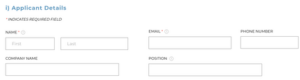

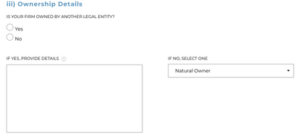
Step 3: The next section ‘Level 2 Data’ gives you the opportunity to report parent company information.
For example, if your company is a branch of a larger organisation, or is owned by another company you may have that information appear on the LEI record. However, this is not a legal obligation. If you wish to report a legal parent company, please note that you will be requested to provide evidence of this relationship by way of Consolidated Accounts (i.e an annual report).
You may only report parent information if the parent company consolidates the accounts and the subsidiary is listed there.
Step 4: The final section allows you to upload documentation relevant to your application.
When an LEI application is submitted, the data is cross matched with what is on the relevant local companies registry.
If however the company cannot be found, or the data does not match the registry, we may request that you provide supporting documentation. Some good examples include a document from ASIC, a Certificate of Incumbency, Register of Directors, or a registry extract.
A registered company in Australia for example may with to provide their ASIC registry form as it confirms important company information.
Once the application is submitted, simply choose your preferred payment method and complete the application. LEI Worldwide use our payments provider STRIPE and PayPal. We also offer the ability to complete a bank transfer or swift payment in any currency including Euro and Australian Dollars.
A member of the LEI Worldwide team will review the submission upon completion and you will receive your LEI code within a few hours.
If you have any questions please contact info@lei-worldwide.com

Number 9 Pembroke Street Upper, Dublin 2, D02 KR83
18 Finsbury Square Alphabeta, London EC2A 1AH
S No 203/1 PL 1/4A B12 APPT, NR UY Patil College Cinchwadgoan, Chinchwad Mulshi Pune, Pune 411033, Maharashtra, India
Awards





Supported By




Payment